

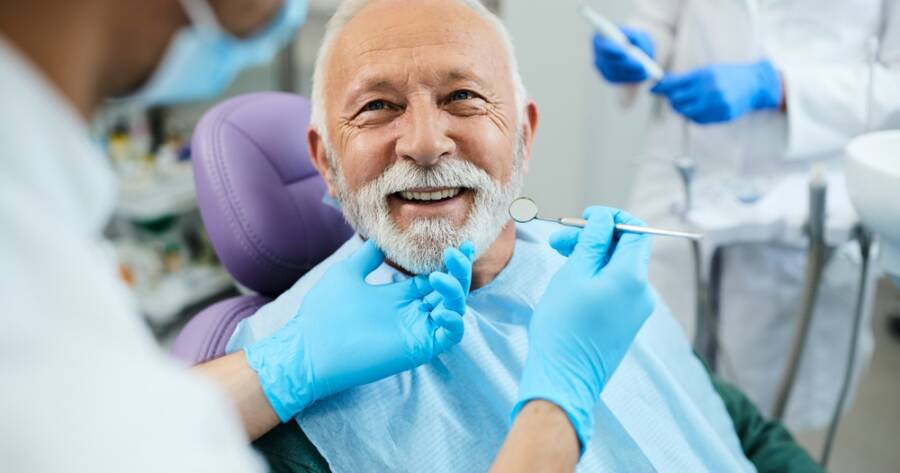
Dental implants can help older adults replace missing teeth, and some patients may qualify for temporary restorations placed on the same day as implant surgery. However, “same-day” treatment does not mean the entire process is completed in one appointment. Health, bone condition, healing needs, and treatment complexity all influence eligibility, recovery, and when the final restoration can be placed.
Why Tooth Loss Is a Common Challenge for Older Adults
Millions of Americans over 65 face significant oral health challenges, and tooth loss remains one of the most widespread concerns. About 15% of U.S. adults aged 65 and older have lost all of their natural teeth, according to the latest national oral-health surveillance data (source). Additionally, three out of five older adults are affected by periodontitis, a serious form of gum disease that can ultimately lead to tooth loss if left untreated (source).
A major complicating factor for many seniors is insurance coverage. Medicare, the primary health insurance program for older Americans, generally excludes dental care from its standard benefits, leaving many patients to manage dental costs independently (source). This financial barrier makes it especially important for seniors to understand all available treatment options — including same-day dental implants, which can consolidate the treatment timeline significantly.
Are Dental Implants Effective for Older Patients?
A common misconception is that advancing age disqualifies someone from receiving dental implants. In reality, implants are equally effective and durable for older patients — “no age is too old for dental implants,” says WebMD (source). The procedure itself has a strong track record, and seniors who are healthy enough for the surgery can expect results comparable to those seen in younger patients.
What matters far more than a patient’s age is their overall health, the condition of their gums and jawbone, and the specifics of the planned treatment. Bone density, bite forces, and underlying medical conditions all play a role in determining candidacy. For same-day implants in particular, “age alone is not usually the deciding factor… the more important questions are usually about overall health, oral health, bone and gum condition, bite forces, and the details of the treatment plan” (source).
What Same-Day Dental Implants Actually Involve
Same-day dental implant treatment generally means that a temporary restoration is attached soon after the implants are placed. The process does not end after that appointment, since the implants still need time to heal and integrate with the jawbone. Additional visits are typically required before the temporary teeth can be replaced with the final restoration (source).
For many seniors, this approach is appealing because it minimizes the period spent without functional teeth. For eligible patients, temporary teeth can reduce the amount of time spent without a visible restoration, although eating instructions and activity restrictions may still apply while the implants heal. The overall implant process from start to finish typically spans three to nine months, with periodic check-ins throughout to confirm that healing is progressing properly (source).
What Seniors Can Expect During Recovery
Recovery experiences vary after dental implant surgery. Swelling, tenderness, bruising, minor bleeding, and discomfort can occur, while the length of recovery depends on the procedure and the individual patient. Recovery after dental implant surgery varies from person to person. Some patients are able to resume many routine activities relatively quickly, although temporary soreness, swelling, bruising, or other postoperative symptoms may occur during the early healing period (source). That said, the body still needs time for the implant to fully integrate with the surrounding bone, which is why follow-up visits are a critical part of the process rather than just routine checkups.
Seniors should also account for any preparatory procedures that might be needed before implant placement, such as extractions or bone grafting. These pre-treatment steps affect both the overall timeline and the total cost of care. Factors influencing cost include the number of implants, the type of restoration selected, whether preparatory work is needed, and the complexity of the individual case (source).
Long-Term Care for Dental Implants
One of the strongest advantages of dental implants is their longevity. Dental implants are designed to provide long-term support and may remain functional for many years when they are cared for properly. The crowns, bridges, or other restorations attached to the implants can wear over time and may eventually need repair, adjustment, or replacement (source). This makes implants a worthwhile long-term investment for seniors seeking a stable, permanent solution to tooth loss.
Maintaining implants requires consistent dental hygiene habits: regular brushing, flossing, and professional dental visits are all essential. Avoiding behaviors that put excess stress on the teeth, such as chewing on hard candies or ice, or using tobacco products, significantly extends the lifespan of the restoration (source). For older adults, maintaining oral health also supports overall systemic health, making these habits even more meaningful.
Why Seniors Should Learn More About Same-Day Dental Implants Today
Same-day dental implants represent a meaningful advancement for older adults who want to restore their smiles without enduring long periods without functional teeth. Seniors who previously assumed they were too old or not healthy enough for implants may find that they qualify after a professional evaluation. It’s important to remember that age alone does not determine eligibility. Individual health, bone condition, and treatment goals carry far greater weight in that determination.
With implants capable of lasting a lifetime under proper care, and with recovery often being more manageable than expected, older adults have strong reasons to explore this option. Speaking with a qualified dental professional is the most effective way to determine whether same-day implants are the right path forward for any individual’s oral health needs.